



Reviewed by Tamriko Bogle, Laser Specialist & Clinical Aesthetician, and the Bogat aesthetics team · Medical Director: Dr. Luis Martinez, MD · Last reviewed: June 2026
It’s the first question almost everyone asks before their first laser session — usually right after finding photos of the area they want treated and right before looking up the price. And it deserves a better answer than the two extremes the internet offers: “totally painless!” (it isn’t) and horror stories (also not the reality, at least not at a properly run practice).
So here’s the straight version: what each pulse actually feels like, which areas are sensitive and which barely register, how it stacks up against waxing, what modern cooling technology changes, and what you can do to make your sessions easier.
Quick Definitions
Pulse — one brief flash of laser energy. A session is a series of pulses moving across the treatment area, each lasting a few milliseconds.
Dynamic cooling — a burst of cooling sprayed onto the skin a fraction of a second before each pulse, built into the laser itself (the Candela approach used at Bogat).
Pain threshold vs. sensation — almost everyone feels laser pulses; far fewer would call them painful. The distinction matters more than any pain-scale number.
Treatment-area sensitivity — how much a pulse registers depends mostly on where it lands: skin thickness, nerve density, and hair coarseness vary widely across the body.
So, Does It Hurt?
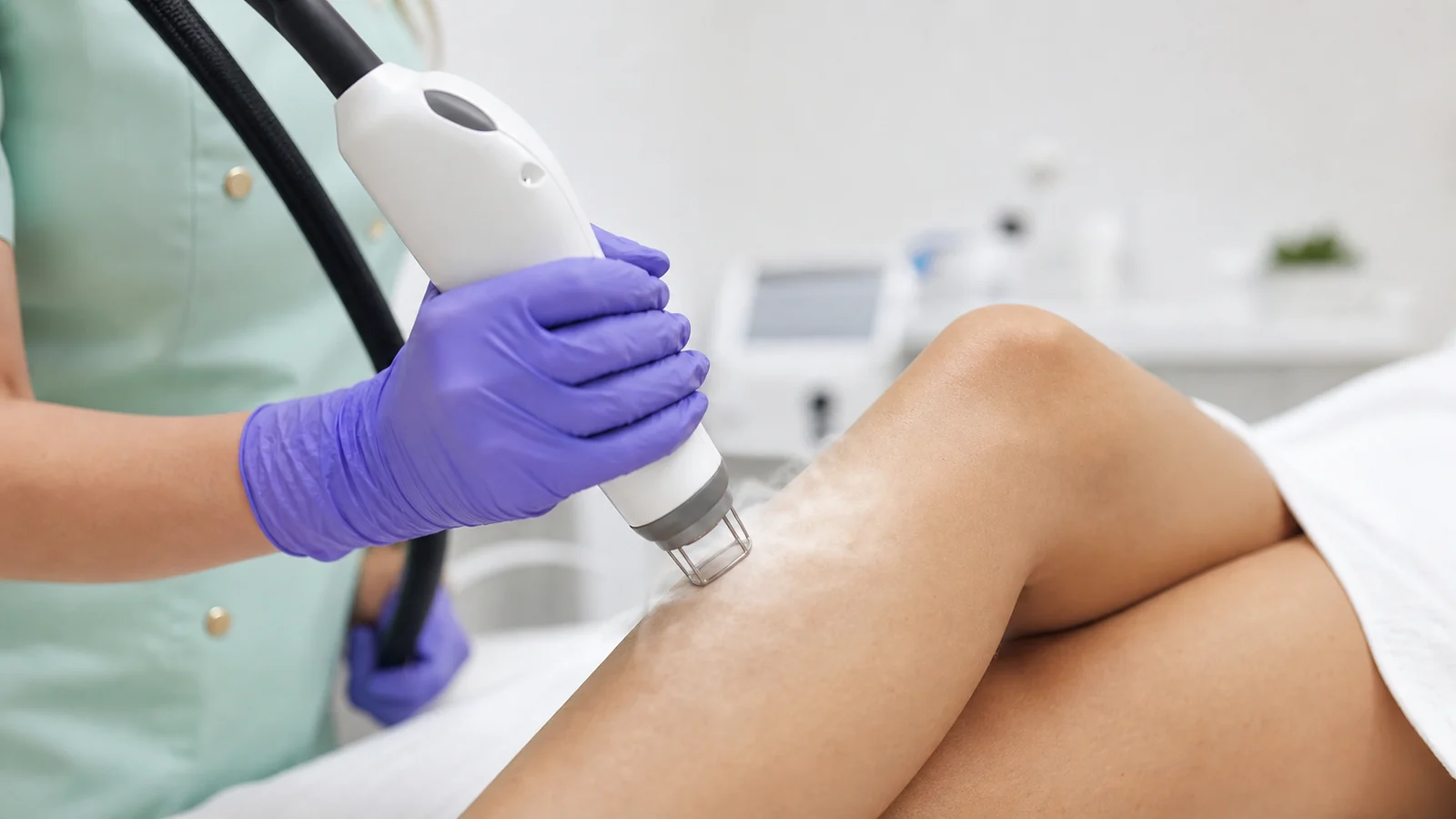
Laser hair removal is uncomfortable in brief flickers, and very tolerable overall for most people. The classic description — a rubber band snapping lightly against the skin — is accurate for most pulses: a quick, hot snap that’s over before you’ve finished registering it. For most clients there’s no lingering pain between pulses; mild warmth or redness afterward is common and settles on its own.
Three things make the experience much easier than people expect. The sensation is fast — milliseconds per pulse, and each one is done before it builds. It’s predictable — the pulses land in a steady rhythm, so there’s no flinch-inducing surprise after the first few. And it shrinks over the series — fewer, finer hairs mean less pigment absorbing energy, so later sessions are noticeably gentler than the first.
The flip side is real too: some pulses, on some areas, genuinely sting. Bony spots and dense-hair zones have their moments. But ask people who’ve had it done, and the most common verdict is “way more comfortable than I expected” — that’s the realistic bar, not “you won’t feel a thing.”
What It Feels Like, Area by Area
Sensation isn’t the same everywhere — it depends on the skin and hair in each zone. Here’s how the most-requested areas usually feel, from the easiest to the most sensitive:
| Area | What it usually feels like |
|---|---|
| Legs / arms | The easiest areas — larger and less nerve-dense, so most pulses read as warm snaps. Many people find legs almost relaxing by the second session. |
| Underarms | Quick but lively. Thin skin and coarse hair make pulses sharper, but the area is small, so it’s over in minutes — often before discomfort registers. |
| Bikini / Brazilian | The most sensitive area for most people: dense hair plus nerve-rich skin means real stings. Sessions are short, and this is the area where discomfort drops the most as hair thins over the series. |
| Face (lip, chin) | Sharp but tiny. The upper lip is nerve-dense, so pulses are distinct — but there are very few of them; a lip treatment is often under five minutes. |
| Chest / back | Mostly easy, with livelier moments near bone — the sternum, shoulder blades, and spine. |
The pattern: the areas that sting the most are also the smallest or the fastest-improving. For most clients, no area stays uncomfortable for long, and nothing lingers after the session beyond mild warmth, like a touch of sun.
Ready to Book Your Laser Hair Removal?
Fill out the form and our team will help you schedule your consultation and first session — and answer any questions along the way.
"*" indicates required fields


Laser vs. Waxing vs. Epilating: the Comparison Everyone Actually Wants
Most people considering laser aren’t comparing it to “nothing” — they’re comparing it to what they already endure.
Waxing rips every hair out at the root, across the whole area, with the sting arriving in big tearing waves — and it does that every three to four weeks, for as long as you keep it up. Laser delivers smaller, faster flickers of sensation, needs no regrowth between sessions (you shave, not grow it out — a genuinely underrated advantage), and the series ends.
Epilating is waxing’s slow-motion cousin — most people who’ve used an epilator find laser dramatically easier.
Shaving doesn’t hurt, but it also doesn’t end: it’s daily friction, razor burn, and ingrown hairs in perpetuity — the original problem laser exists to solve.
Asked to rank a single session’s discomfort, most clients who’ve done both put laser clearly below waxing — and unlike waxing, each laser session makes the next one easier.
What Modern Cooling Changes
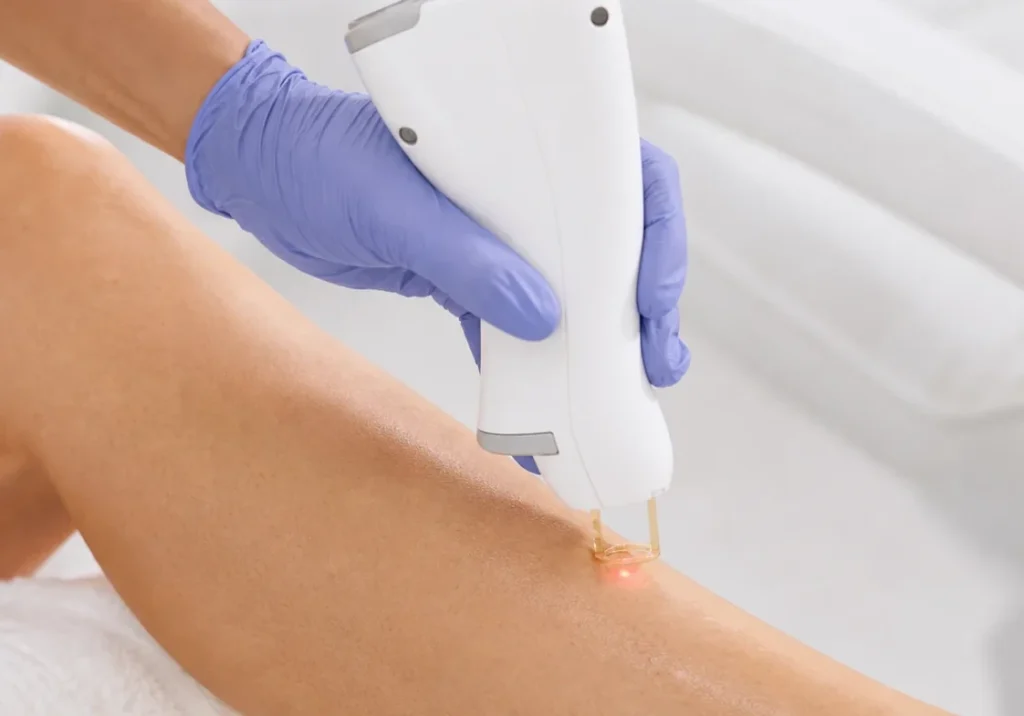
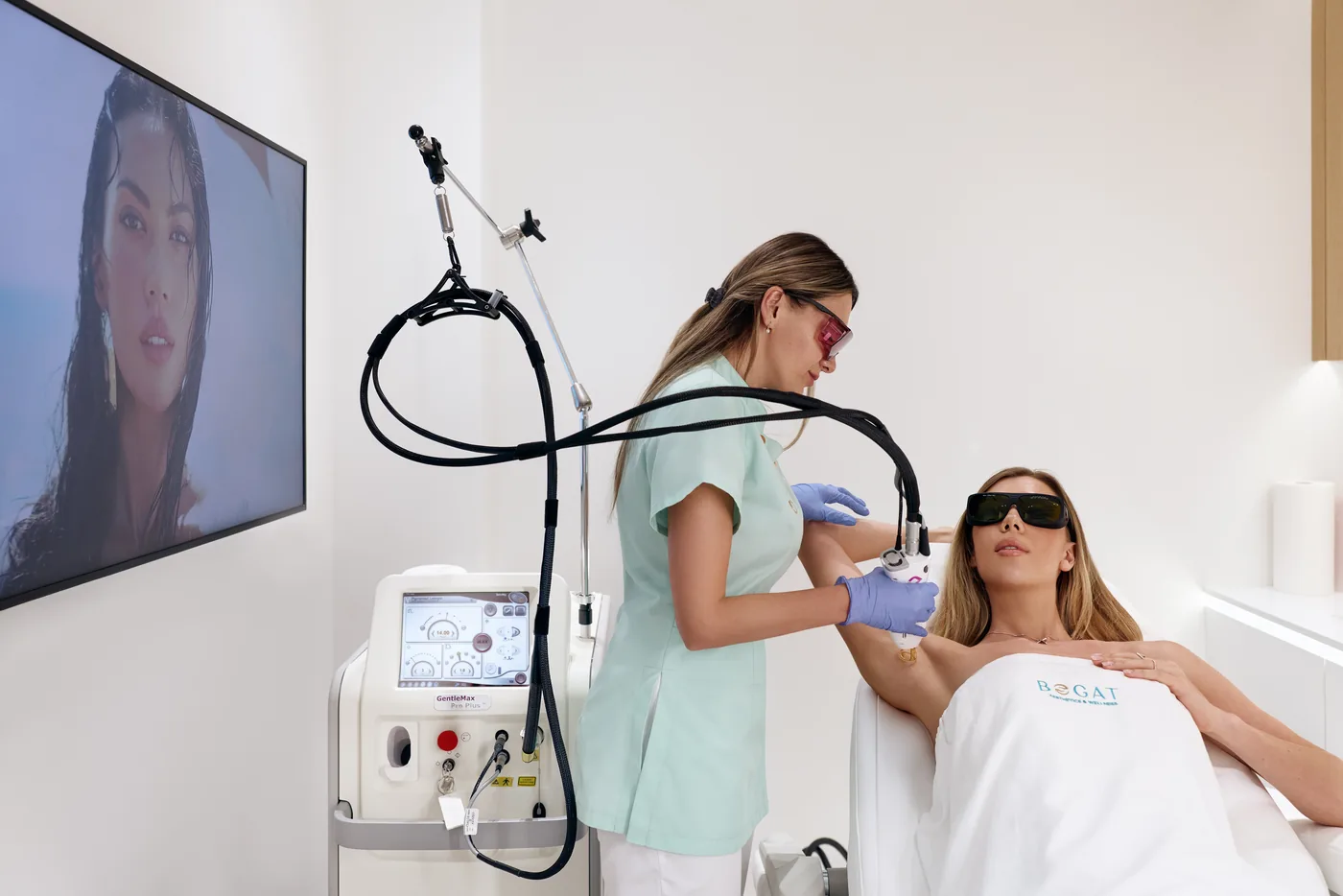
The biggest comfort difference between today’s treatments and the stories from 15 years ago is built-in skin cooling. The platform used at Bogat — the Candela GentleMax Pro Plus — sprays a brief cooling burst onto the skin immediately before each laser pulse, so the surface is protected and the “hot” part of the snap is blunted at the exact moment it happens. It’s automatic, synchronized with every single pulse, and it’s a large part of why first-timers so often say the treatment was milder than they’d braced for.
Comfort also depends on the human holding the handpiece: working at a steady rhythm, reading your responses, adjusting pacing on sensitive zones, and choosing settings that are effective without being needlessly aggressive. Equipment sets the ceiling; the provider’s technique decides how close the session gets to it. (How treatments are personalized at Bogat →)
How to Make Your Sessions Easier
A few things genuinely help, and they’re all simple:
Shave properly the day before. Surface stubble absorbs laser energy at skin level — exactly where you don’t want heat. A clean shave sends the energy down the shaft to the follicle instead. This is the single biggest comfort factor you control.
Consider your timing. Some clients feel more sensitive after caffeine or during their period — especially for bikini work. If that sounds like you, scheduling around it can make the appointment easier. It’s free comfort.
Arrive without sunburn or active tan on the area. Heat-stressed skin feels more and tolerates less — and sun management around sessions is non-negotiable anyway (your provider will walk you through the rules).
Breathe through the first dozen pulses. The first few are the hardest because they’re unknown. Once your brain files the sensation as “brief and predictable,” the rest of the session usually feels much easier — many clients say exactly this.
Talk to your provider. Pacing, brief pauses, extra cooling passes on sensitive spots — comfort adjustments are part of the job, not a special request.
Frequently Asked Questions
Does laser hair removal hurt more than waxing?
What's the most painful area for laser hair removal?
Can I use numbing cream before laser hair removal?
Does it hurt less each session?
Why does it feel like a rubber band snap?
Will my skin hurt afterward?
What are these little bumps right after treatment?
How soon can I work out, wear deodorant, or swim?
Can I get laser hair removal near a tattoo?
Recap & Next Step
The bottom line: laser hair removal feels like quick, hot snaps — brief, predictable, and very tolerable for most people, with bikini and lip work the spiciest and legs the easiest. Most people who’ve done both rank it below waxing, modern pulse-synchronized cooling has changed the experience entirely, and sessions typically get gentler as hair thins. “More comfortable than I expected” is the most common first-session reaction — and a fair forecast.
If you’re in South Florida, Bogat Aesthetics & Wellness performs laser hair removal in Hallandale Beach on the Candela GentleMax Pro Plus with cooling built into every pulse — and a consultation where you can ask everything, including this question, before committing to anything.
See the areas we treat and book your consultation →
Glossary
| Term | What it means |
|---|---|
| Pulse | One brief flash of laser energy, lasting milliseconds |
| Dynamic cooling | A cooling burst applied to the skin automatically before each pulse, built into the device |
| Fluence | The energy level of each pulse — chosen by your provider to be effective for your hair without excess heat |
| Ingrown hair | A hair regrowing into the skin (a shaving/waxing problem laser treatment largely removes) |
| Erythema | Temporary redness after treatment — the mild, expected kind fades within hours to a day |
References
- American Academy of Dermatology — Laser hair removal: FAQs (sensation, side effects, expectations)
- Mayo Clinic — Laser hair removal: What you can expect
- Gan SD, Graber EM. Laser hair removal: a review. Dermatologic Surgery. 2013;39(6):823–838. PubMed
- Candela Medical — GentleMax Pro Plus platform documentation (integrated cooling)
- Nanni CA, Alster TS. Laser-assisted hair removal: side effects. Journal of the American Academy of Dermatology. 1999;41(2):165–171. PubMed
This article is for educational purposes and is not a substitute for a consultation. Sensation varies by individual, area, and settings — a qualified provider should assess your skin and walk you through what to expect before treatment.